



Dopamine Receptor
Dopamine Receptors are a class of G protein-coupled receptors that are prominent in the vertebrate central nervous system (CNS). The neurotransmitter dopamine is the primary endogenous ligand for dopamine receptors. Dopamine receptors are implicated in many neurological processes, including motivation, pleasure, cognition, memory, learning, and fine motor control, as well as modulation of neuroendocrine signaling. Abnormal dopamine receptor signaling and dopaminergic nerve function is implicated in several neuropsychiatric disorders. Thus, dopamine receptors are common neurologic drug targets; antipsychotics are often dopamine receptor antagonists while psychostimulants are typically indirect agonists of dopamine receptors. There are at least five subtypes of dopamine receptors, D1, D2, D3, D4, and D5. The D1 and D5 receptors are members of the D1-like family of dopamine receptors, whereas the D2, D3 and D4receptors are members of the D2-like family.
Dopamine Receptor Isoform Specific Products
All Product Categories
-
Dopamine Receptor Inhibitors
(144)
View all products
-
Dopamine Receptor Agonists
(257)
View all products
-
Dopamine Receptor Antagonists
(446)
View all products
-
Dopamine Receptor Activators
(20)
View all products
-
Dopamine Receptor Modulators
(46)
View all products
-
Dopamine Receptor Chemical
(1)
View all products
-
Dopamine Receptor MDM2 Inhibitor
(1)
View all products
-
Dopamine Receptor Controls
(7)
View all products
-
Dopamine Receptor Ligands
(17)
View all products
-
Dopamine Receptor Related Products (1078)
Related Products (1078)

-
Antibodies (7)
-
Related Compound Screening Libraries (1)
-
Dopamine Receptor Isoform Comparison
-
SKF-83566 hydrochloride
 0 ImagesCat. No.: HY-103430BCAS No.: 164265-49-0SKF-83566 hydrochloride is an orally active, blood-brain barrier-permeable D1/D5 dopamine receptor antagonist with a Ki value of approximately 0.4-0.56 nM. SKF-83566 hydrochloride modulates locomotor behavior and spatial memory by blocking D1 receptors and inhibits glioblastoma progression by targeting the DRD1/c-Myc/UHRF1 pathway. SKF-83566 hydrochloride acts as an inhibitor of the dopamine transporter (DAT) and adenylyl cyclase 2 (AC2). SKF-83566 hydrochloride competitively binds to DAT to inhibit dopamine reuptake and non-competitively inhibits AC2 activity, thereby reducing cAMP accumulation. SKF-83566 hydrochloride is used in research areas such as dopaminergic system mechanisms, learning and memory, targeted intervention for glioblastoma, AC2 pathophysiology, antiparasitic drug screening, and synaptic plasticity (the "gating effect").
-
Dicarbine
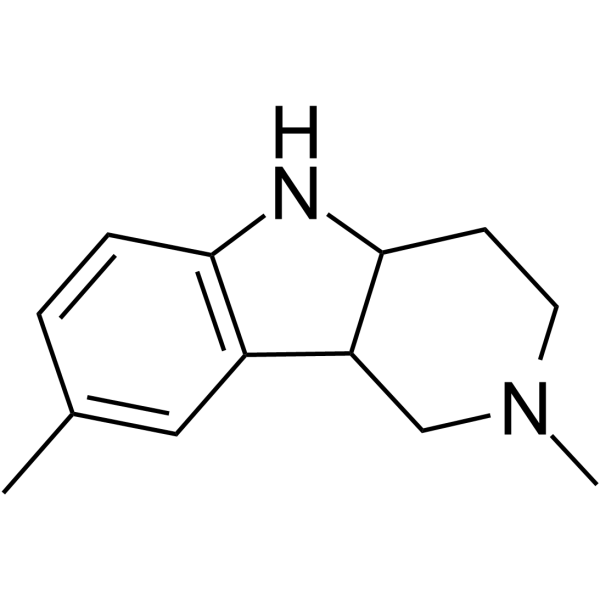 0 ImagesCat. No.: HY-127086CAS No.: 17411-19-7Dicarbine blocks dopamine receptors in various brain parts and prevents the depression of the conditioned defence reflexes caused by stimulation of the mesencephalic portion of the reticular formation. Dicarbine could be used in the schizophrenia and alcoholic psychosis studies.
-
Benperidol (Standard)
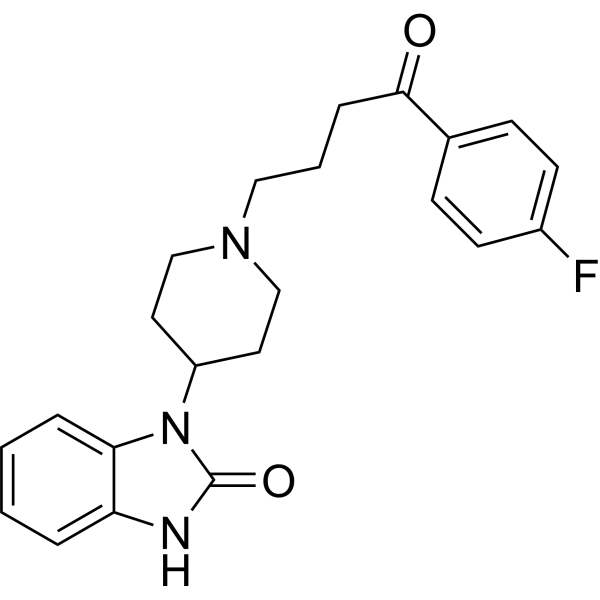 0 ImagesCat. No.: HY-121276RCAS No.: 2062-84-2Benperidol (Standard) is the analytical standard of Benperidol. This product is intended for research and analytical applications. Benperidol is a relatively old antipsychotic agent. Benperidol is a butyrophenone antipsychotic, with the highest neuroleptic potency in terms of D2 receptor blockade.
-
PD 119819
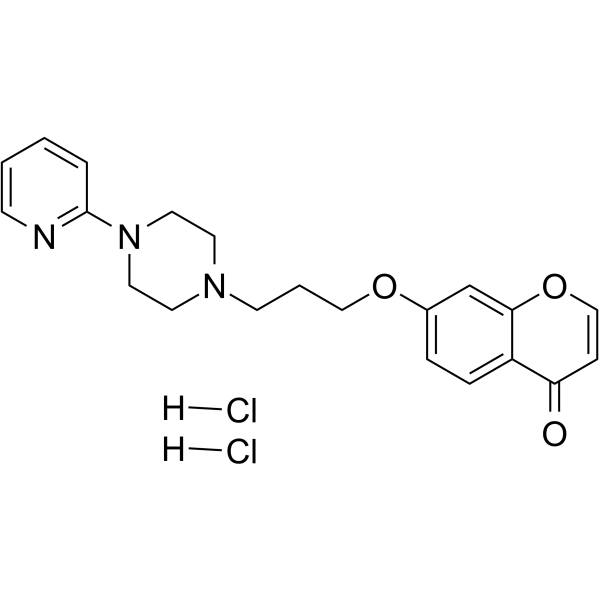 0 ImagesCat. No.: HY-118402CAS No.: 105277-43-8PD 119819 is a highly selective benzopyran-4-one brain dopamine autoreceptor agonist. PD 119819, a heterocyclic piperazine, inhibits spontaneous locomotor activity and brain dopamine synthesis.
-
Pergolide mesylate (Standard)
 0 ImagesCat. No.: HY-13720ARCAS No.: 66104-23-2Synonyms: Pergolide methanesulfonate (Standard); LY127809 (Standard)Pergolide (mesylate) (Standard) is the analytical standard of Pergolide (mesylate). This product is intended for research and analytical applications. Pergolide mesylate (Pergolide methanesulfonate), an Ergoline derivative, is a potent and orally active dopamine D1 and D2 receptors agonist. Pergolide mesylate can be used for Parkinson's disease and hyperprolactinaemia research.
-
Benztropine-13C,d3 mesylate
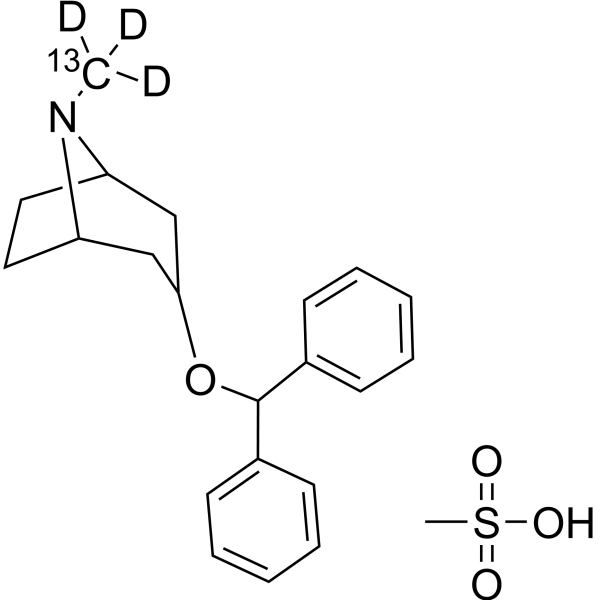 0 ImagesCat. No.: HY-B0520ASBenztropine-13C,d3 (mesylate) is the 13C- and deuterium labeled Benztropine (mesylate). Benztropine mesylate (Benzatropine mesylate) is an orally active centrally acting anticholinergic agent that can be used for Parkinson's disease research. Benztropine mesylate is an anti-histamine agent and a dopamine re-uptake inhibitor. Benztropine mesylate is also a human D2 dopamine receptor allosteric antagonist. Benztropine mesylate also has anti-CSCs (cancer stem cells) effects.
-
Zicronapine fumarate
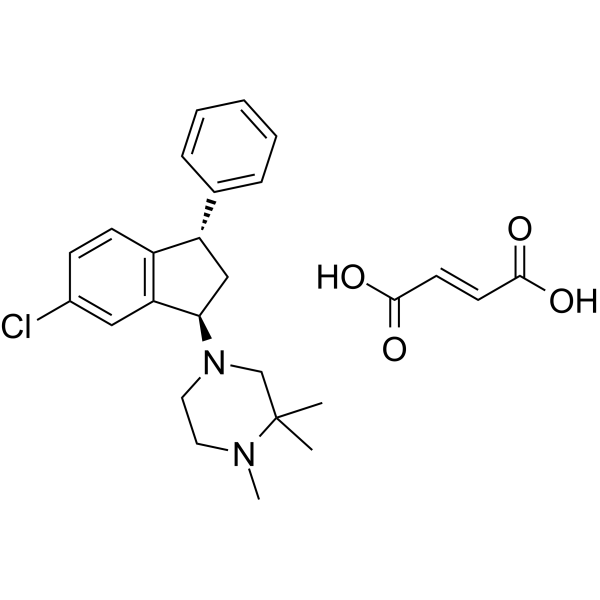 0 ImagesCat. No.: HY-14827ACAS No.: 170381-17-6Synonyms: Lu 31-130 fumarateZicronapine (Lu 31-130) fumarate is an antipsychotic agent with a strong pro-cognitive effect in animal models and the potential to treat a number of neurological and psychiatric diseases. Zicronapine (Lu 31-130) fumarate has potent antagonistic effects at dopamine D1/D2, and serotonin 5-HT2A receptors.
-
Flucindole
 0 ImagesCat. No.: HY-105760CAS No.: 40594-09-0Flucindole is an orally active dopamine receptor inhibitor (IC50 = 240 nM) that also exhibits affinity for S2 receptors. Flucindole inhibits amphetamine-induced stereotyped behaviors in rats, and increases the levels of dopamine metabolites in the striatum of rats and mice. Flucindole can be used in the research of psychosis.
-
Fluoroclebopride
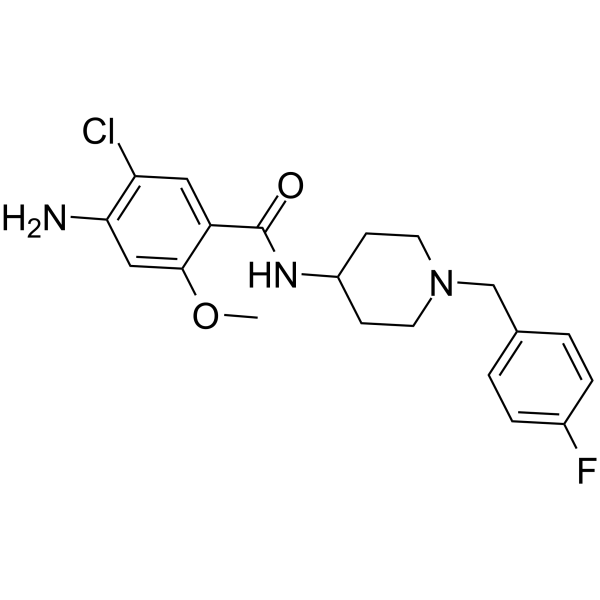 0 ImagesFluoroclebopride binds reversibly to dopamine receptors. 18F labeled fluoroclebopride has been used as a probe for studying D2/D3 receptor availability via PET in various monkey models.
-
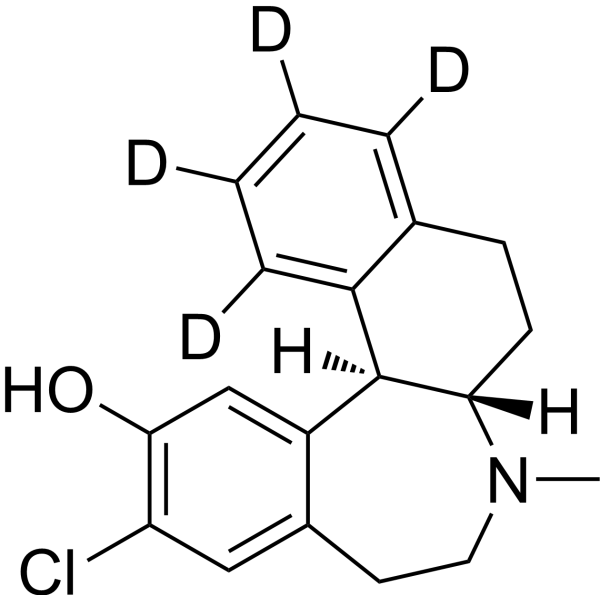
Mazapertine
 0 ImagesMazapertine is an orally active antipsychotic agent. M azapertine antagonizes to dopamine D2/3/4 receptors (Ki values < 3 nM) and also strongly binds to serotonin 5-HT1A receptor (Ki =1.7 nM) and α1-adrenergic receptor (Ki = 1.3 nM). Mazapertine can be used for the research of neurological disease.
-
Cinitapride monotartrate
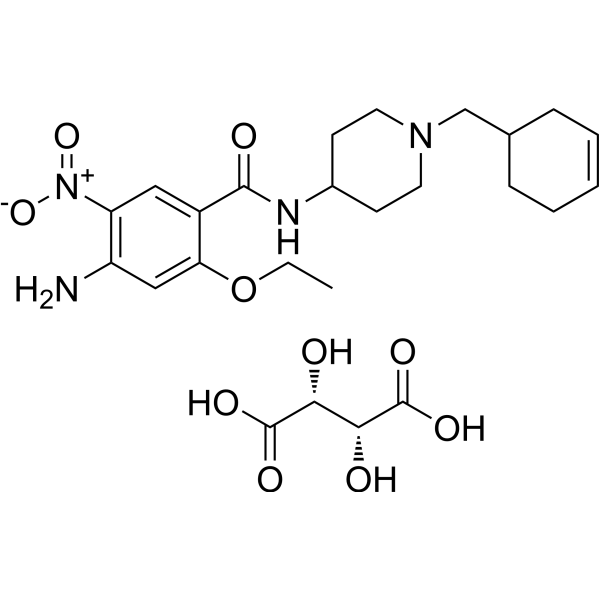 0 ImagesCat. No.: HY-128386CAS No.: 1207859-16-2Cinitapride monotartrate is a 5-HT1A and 5-HT4 agonist. Cinitapride monotartrate is also a 5-HT2A and D2 antagonist. Cinitapride monotartrate can be used for the research of functional dyspepsia.
-
Levomepromazine hydrochloride
 0 ImagesLevomepromazine (Methotrimeprazine) hydrochloride is an orally active antipsychotic compound and Ca2+ release inducer. Levomepromazine inhibits SERCA pump and induces an increase in cytoplasmic Ca2+ levels. Levomepromazine hydrochloride has antagonistic effects on a variety of neurotransmitter receptors, including dopamine, cholinergic, serotonin, and histamine receptors. Levomepromazine hydrochloride can induce adaptive ER stress and autophagy. In addition, Levomepromazine hydrochloride has antiviral, anti-inflammatory, neuroprotective and analgesic, sedative and anti-injurious activities. Levomepromazine hydrochloride can be used in the study psychiatric disorders and relieving nausea and vomiting.
-
(-)-UH 232
 0 ImagesCat. No.: HY-180422CAS No.: 95999-11-4(-)-UH 232 is a central dopamine (DA) receptor agonist. (-)-UH 232 weakly decreases 3, 4-dihydroxyphenylalanine (DOPA) formation in striatal and limbic brain regions in rats. (-)-UH 232 can be used for the research of neurological diseases including parkinson's disease and schizophrenia.
-
Ro 10-5824
 0 ImagesCat. No.: HY-101384CAS No.: 189744-46-5Ro 10-5824 is a potent and selective D4R partial agonist with a Ki of 5.2 nM. Ro 10-5824 increases novel object exploration in C57 mice.
-
RS-12254
 0 ImagesCat. No.: HY-120405CAS No.: 137550-79-9RS-12254 is a compound with hypotensive, diuretic and sympathostatic effects, and has the activity of regulating blood pressure, water and salt metabolism and sympathetic nerve activity. RS-12254 can lower blood pressure, reduce plasma norepinephrine levels, has diuretic and natriuretic effects, and has sympathostatic properties.
-
PZ-1190
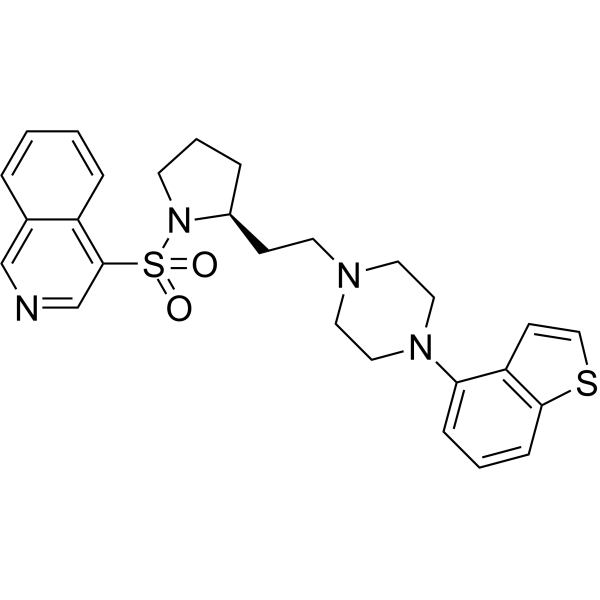 0 ImagesCat. No.: HY-155378CAS No.: 1852517-78-2PZ-1190 is a multitarget ligand for serotonin and dopamine receptors with potential antipsychotic activity in rodents.
-
Berupipam hemifumarate
 0 ImagesCat. No.: HY-107081CAS No.: 172940-14-6Berupipam hemifumarate is a selective antagonist of the dopamine D1 receptor (dopamine D1 receptor). Berupipam hemifumarate is a substrate of UDP-glucuronosyltransferase (UGT) and has a high affinity for UGT enzymes but a relatively low conversion rate. The glucuronidation rate of Berupipam hemifumarate varies among different species and genders. Berupipam hemifumarate can be used for the study of psychotic disorders.
-
Risperidone-d4-1
 0 ImagesCat. No.: HY-11018S1Synonyms: R 64 766-d4-1Risperidone-d4-1 (R 64 766-d4-1) is the deuterium labeled Risperidone (HY-11018). Risperidone is a serotonin 5-HT2 receptor blocker, P-Glycoprotein inhibitor and potent dopamine D2 receptor antagonist, with Kis of 4.8, 5.9 nM for 5-HT2A and dopamine D2 receptor, respectively.
-
Metopimazine acid-d6 (hydrochloride)
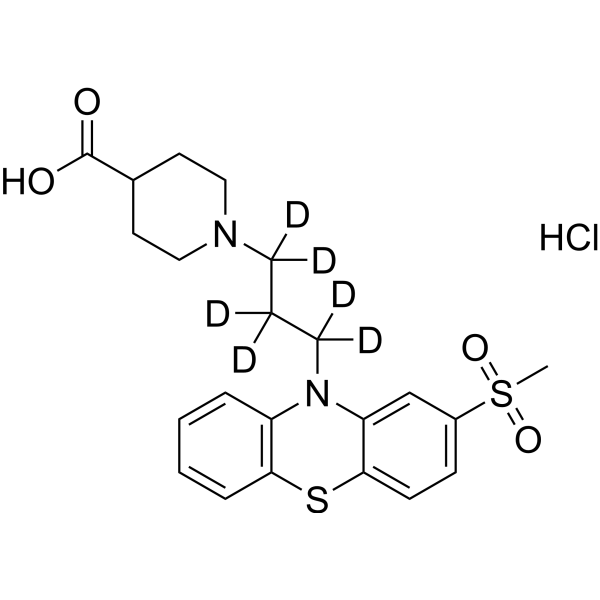 0 ImagesCat. No.: HY-143994SMetopimazine-d6 hydrochloride is the deuterium labeled Metopimazine (HY-116578). Metopimazine (EXP999; RP9965) is a phenothiazine, orally available, selective dopamine D2 receptor antagonist that does not penetrate the blood-brain barrier. Metopimazine blocks dopamine D2 receptors in the chemoreceptor trigger zone and the periphery, thereby inhibiting nausea and vomiting. Metopimazine is indicated for chemotherapy-induced nausea and vomiting, and has low central side effects due to its poor brain penetration. The use of metopimazine in acute gastroenteritis may have potential risks.




